Stomach Surgery
Stomach Surgery in Boulder, CO
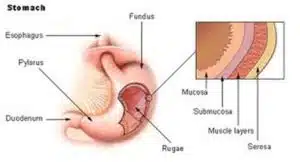
The biggest organ in the digestive tract is the stomach. It is located higher than many think. It is found under the lower ribs, and not in the vicinity of the navel. It is a muscular sac that lies between the esophagus and the upper small intestine. Digestion of food starts here, and the stomach is even a temperature regulator. We can, however, live without the stomach. Stomach surgery is most often required either due to or stomach ulcers or stomach cancer.
Stomach Conditions Requiring Surgery
Alpine Surgical provides stomach surgery in Boulder, CO, to treat different stomach conditions, including the following:
- Stomach Ulcer (Peptic Ulcer Disease)
- Stomach Tumors (benign and malignant)
- Stomach Cancer
Stomach Ulcers
An ulcer is literally a sore – a localized erosion of mucous membranes. An ulcer can result from infection, inflammation, or cancer. Certain foods, beverages, and substances like alcohol, caffeine, and aspirin can irritate the stomach and cause ulcers.
Non-surgical treatments for ulcers can include medicines that can reduce the amount of stomach acid and lessen the irritation of an ulcer. Bleeding from an ulcer can be stopped using endoscopic therapy.
When medicine and endoscopy cannot control an ulcer, surgery is often the last resort to remove the damaged part of the stomach wall. The goal is to remove as little of the stomach as possible.
Stomach Cancer
Cancer occurs when the cells of the stomach lining begin to divide and grow out of control, causing one or more tumors. If left untreated, cancer destroys the lining and spreads to other parts of the body. Early detection is important, and early stomach cancer has some symptoms.
Some symptoms of advanced stomach cancer are:
- Discomfort in the abdominal region
- Black, tarry stools
- Vomiting after meals or the vomiting of blood
- Weakness
- Fatigue
- Weight loss
- Feeling abnormally full after a meal
When stomach cancer is detected early and not too widespread, the cancer can sometimes be removed using endoscopy. The endoscope is a long tube that is inserted into the patient’s mouth and esophagus and then into the stomach. The surgeon performs the surgery to remove the stomach cancer through the tube, seeing his way with a tiny TV camera inserted into the tube.
Surgical Treatment for Stomach Conditions and Disorders
When stomach cancer is more developed, the cancer is generally treated by surgically removing part or all of the stomach (called a partial or total gastrectomy). After a partial gastrectomy, the remaining portion of the stomach is reconnected to the esophagus and small intestine. After a full gastrectomy, the esophagus is attached directly to the small intestine. Sometimes, completely removing the entire stomach is the only sure way to stop stomach cancer.
Radiation and chemotherapy may also be used with stomach removal or as an alternative.
Getting Back to Normal
Since this is a major operation, you will need post-operative care for your comfort and nutrition.
- One can expect to return to their regular activities after partial or complete stomach removal.
- If the whole stomach is removed, Vitamin B12 shots will be necessary to prevent anemia.
- Ongoing dietary modification may be indicated:
- Eating smaller meals
- Eating more frequent meals
- Avoiding a high intake of fat at any given time
- Making sure that the calories you take in are as nutritious as possible
- Utilizing dietary supplements if you are having difficulty maintaining good nutrition
Stomach Surgery at Alpine Surgical
Whether you have a stomach ulcer or cancer, Alpine Surgical can help you with stomach surgery in Boulder, CO. Our expert general surgeons, Dr. Richard Fox and Dr. Akin Beckley, can provide you with a personalized treatment to help treat your specific condition.